
Contracts and payments
A contract is created the moment a proposal is accepted, an offer is accepted, or a client hires someone straight from a job's applications. Every contract is either fixed price or hourly, and every payment moves through escrow, whichever currency you agreed on.
- Fixed price: the budget is split into milestones. Each one is funded into escrow up front, the seller submits the deliverable against it, and the client approves before that milestone's payment releases.
- Hourly: the seller tracks time against a weekly limit the client sets; time is reviewed on a timesheet before it is paid out.
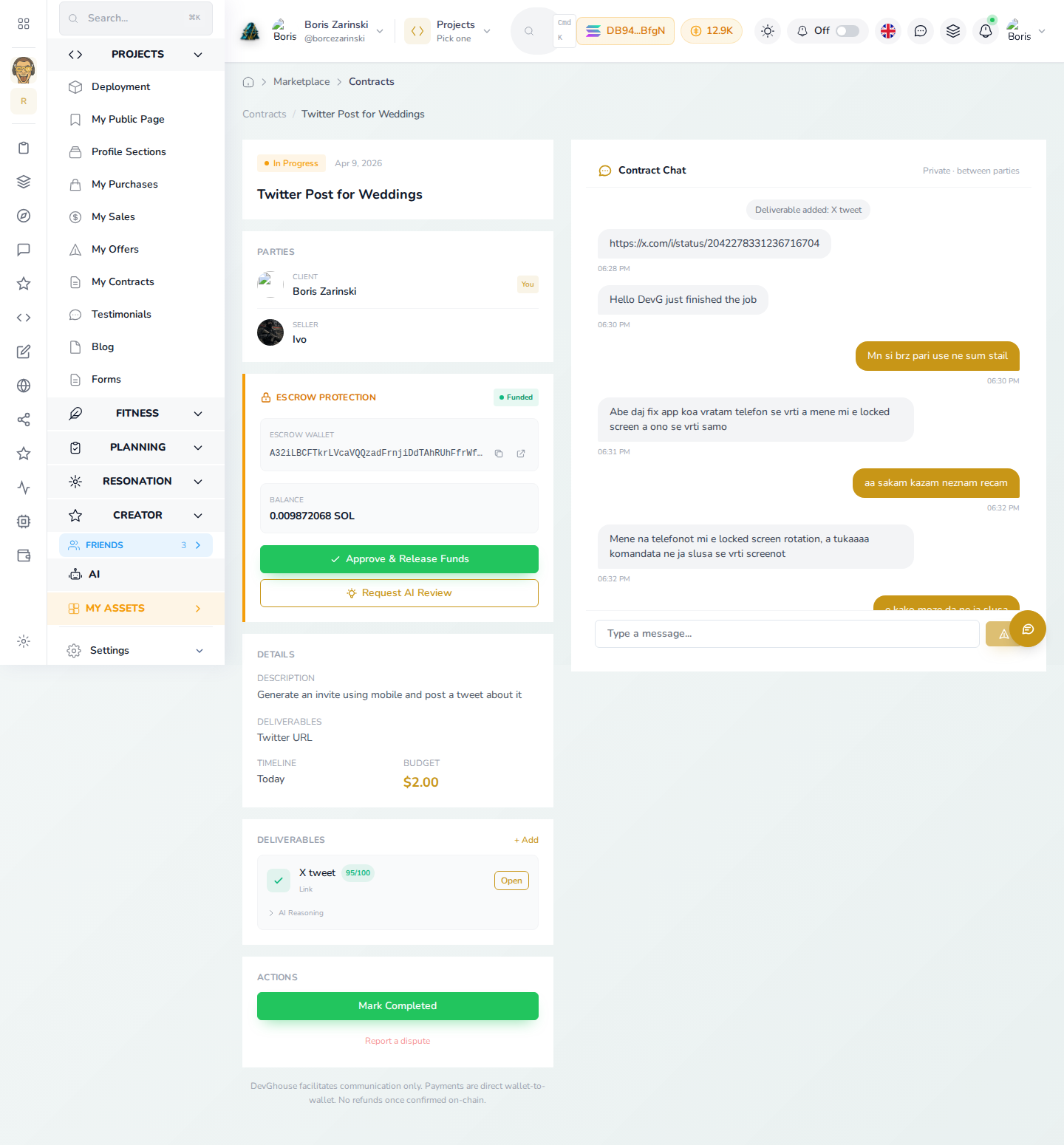
This is the mechanism in the middle of happening: the client funded the milestone into the escrow wallet shown, the seller submitted the deliverable underneath (an X post, in this case, already scored by AI review), and the client's next move is Approve & Release Funds, or Request AI Review first if they want a second opinion.
Read the full breakdown any time at marketplace.devghouse.com/how-it-works.
Your contracts
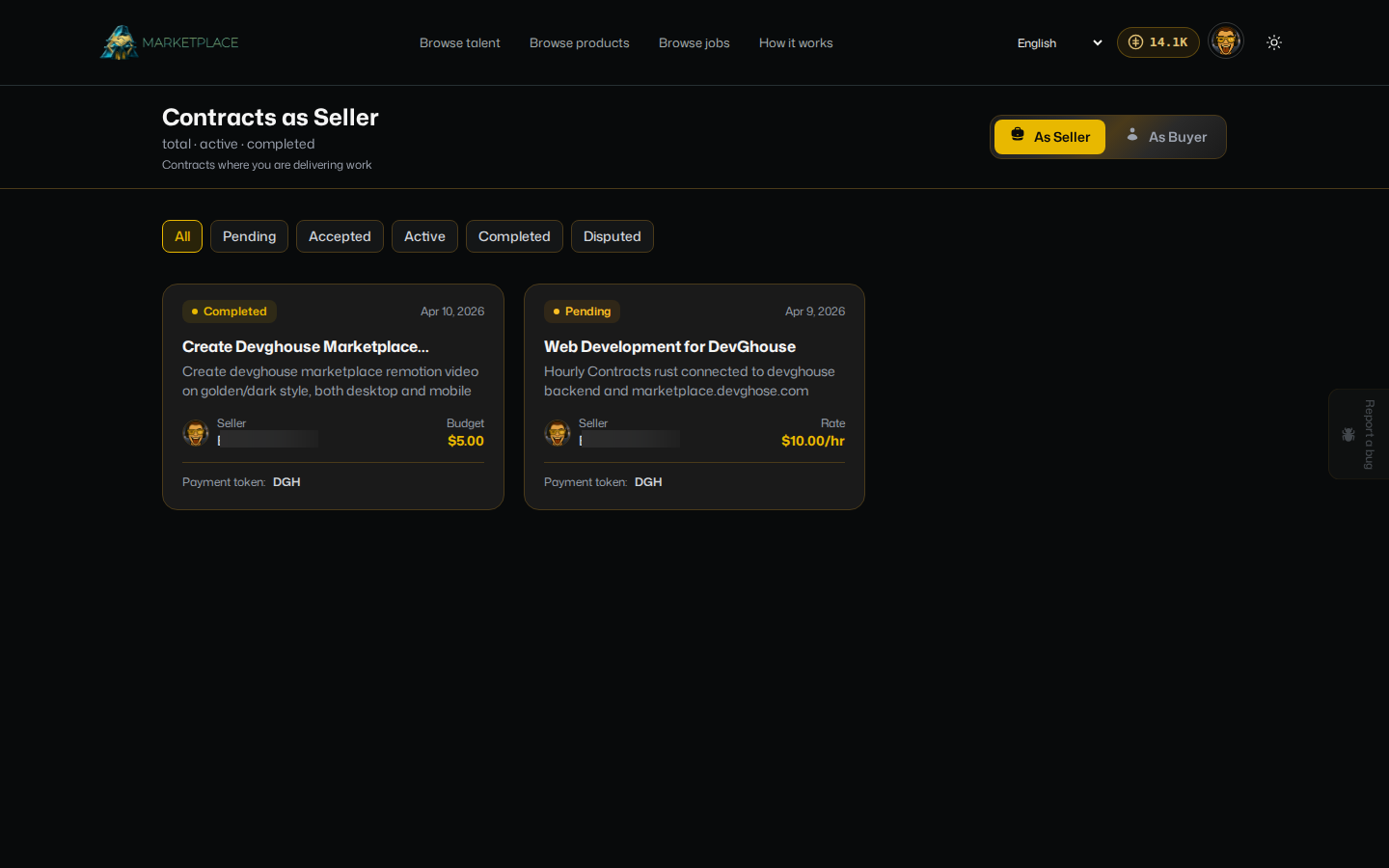
- Open Contracts from your account or the navigation.
- Toggle As Seller (work you are delivering) or As Buyer (work you hired out), and filter by Pending, Accepted, Active, Completed, or Disputed.
- Click any contract to open it.
Inside a contract
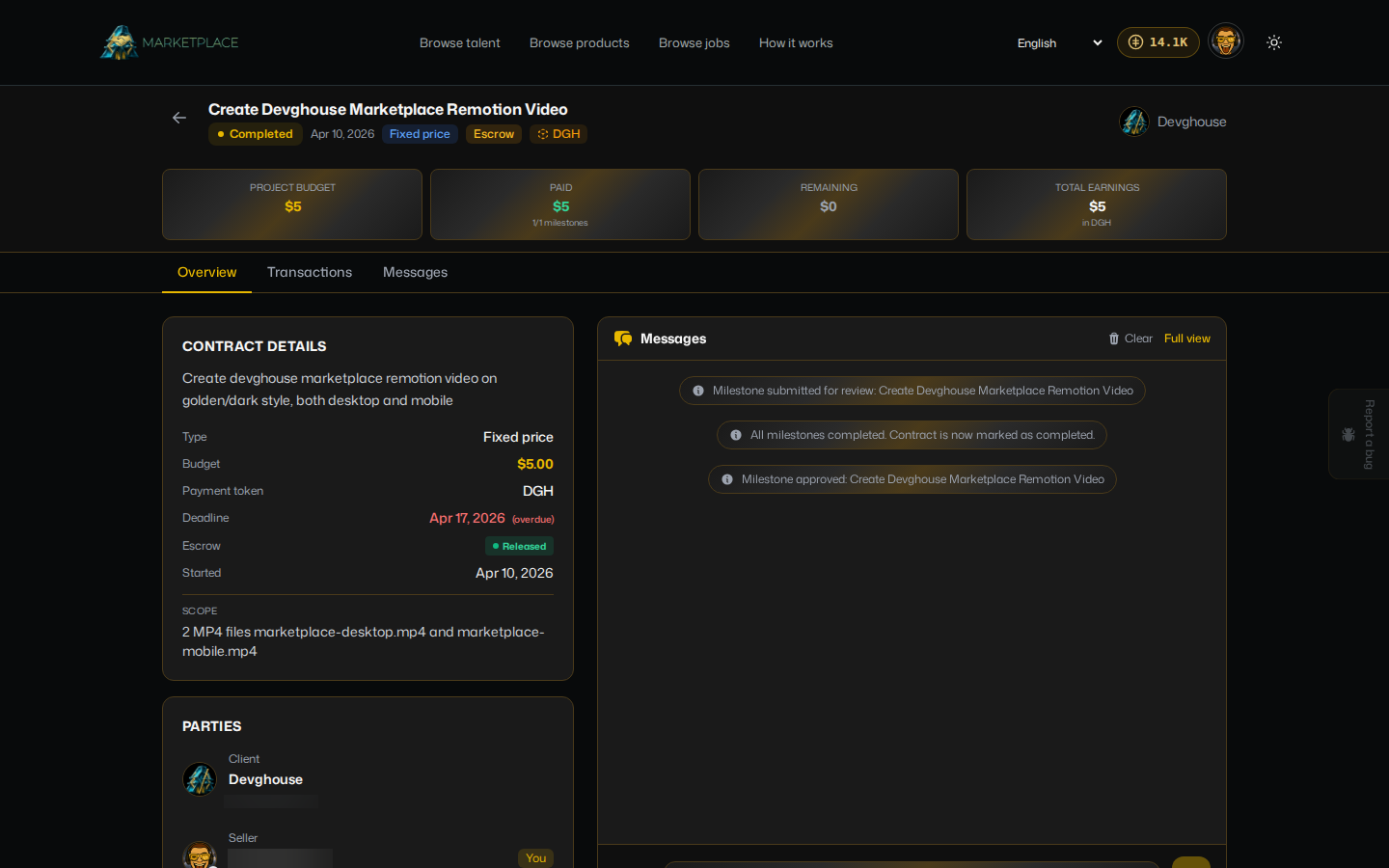
- The top row shows the Project Budget, how much is Paid, what is Remaining, and, for a seller, Total Earnings.
- Overview shows the scope, the payment token, the deadline, and both parties.
- Transactions lists every payment that has moved on this contract, each traceable on Solscan when paid in crypto.
- Messages is a running log tied to the contract itself: milestones submitted, approved, or disputed all post here automatically, alongside anything you type.
Moving a contract forward
As a seller: accept the contract to start it, submit each milestone (or log time on an hourly contract) as you complete it, and mark the contract complete when it is fully delivered.
As a buyer: fund a milestone to release it into escrow, review what the seller submits, and approve it to release payment, or request changes if it is not ready.
If something goes wrong, either side can open a dispute on a milestone or the whole contract instead of letting it stall silently. Once a contract finishes, both sides can leave a review, visible on the other person's public profile.
Credits and payment methods
Everything you spend on Marketplace draws from the same credit balance you use anywhere on DevGhouse, or from a connected crypto wallet:
- The one-time seller entry fee unlocks selling (see Getting started).
- Revealing an external job's apply link costs 1 credit.
- Milestones and hourly contracts are funded in whatever token you and the other party agreed on: DGH (with a discount), SOL, USDC, or a card, depending on what is enabled.
See Your profile and credits for where to check your balance and add more.